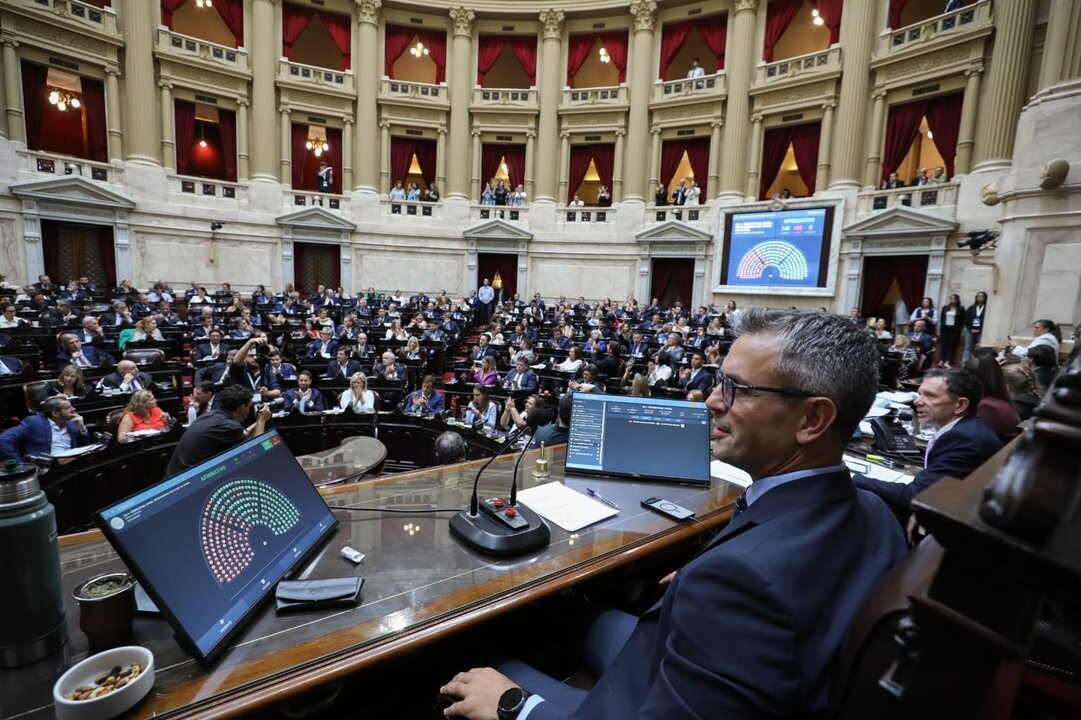
“The idea is to buy time,” confessed an important deputy from the Unidos bloc to the Noticias Argentinas agency. For the opening of the ordinary sessions on March 1, the president wants, at all costs, to have the juvenile penal regime and the parliamentary ratification of the Mercosur-European Union trade agreement finalized, but he especially wants to have the labor reform he calls “modernization” approved, because he considers it a symbol of ultra-libertarian reformism. To give more weight to his message, the president wants to show society that the legislative construction of his government is yielding tangible results, which he estimates will translate into signals of confidence to the markets. The labor reform that flexibilizes working conditions and reduces labor costs for companies is considered by Milei a milestone for the new Argentina and one of the great banners of his management along with the Bases Law. Changes demanded by the opposition. Beyond the changes achieved in the Senate, the opposition wants more and seeks to remove the controversial Labor Assistance Fund (FAL) from the text, which would be a fund fed by a portion of employer contributions to finance indemnities. The detail, unacceptable to the opposition, is that in exchange for companies adhering to the FAL, a portion of their employer contributions is discounted, and these are resources that ANSES renounces in order to subsidize dismissals without cause in the private sector. Another article that sparks strong controversy is the one that reduces to 50% the salary enjoyment during the first three months of leave for illness or accidents not related to work. The opposition also has a critical view of the repeal of a series of professional statutes, among which is that of journalists, and the article that eliminates the fund for the financing of the INCAA. Despite the long weekend that complicates flight logistics, the officialism does not want to leave any loose ends in its objective of concluding the February extraordinary sessions with the coveted labor reform and for this reason, it officially called for a plenary meeting of commissions next Wednesday at 14:00 with the intention of issuing a report and having the project ready to be voted in the chamber the following day. According to Noticias Argentinas, the meeting will be next Wednesday at 14:00 in a joint meeting of the Labor Legislation Commission, chaired by the officialist deputy from Corrientes Lisandro Almirón, and the Budget and Finance Commission, led by his colleague from La Libertad Avanza, Bertie Benegas Lynch. Last Wednesday, the officialism took a firm step in the Senate by achieving the approval of the half sanction of the labor reform, for which it had previously applied more than thirty changes so that allied forces would give their approval. This Friday, the Vice President and head of the Senate, Victoria Villarruel, sent the project to the Chamber of Deputies, and the president of that body, Martín Menem, in direct line with the Casa Rosada, gave the order to step on the accelerator and resume work on the first business day of the week. The decision is totally unusual and even more so in a short week in which flight logistics becomes an ultra-demanding task in which the officialism must pay the utmost attention. The reasons for the rush? In the officialism, they believe that there is no time to lose, since if the opposition in the Chamber of Deputies were to agree to apply modifications to the text, the project would have to return to the Senate. If a week were allowed to pass, the upper house would run out of time to be able to review those modifications (either insisting on the original version or accepting the totality or part of the changes) before the end of the extraordinary sessions and the Legislative Assembly that Javier Milei will head. As this medium was able to find out, the opposition was speculating that the session on the labor reform would not take place until Wednesday, February 25, and plans were already being hatched to demand changes to the project in such a way as to play on the edge of the calendar and complicate the government's goal. “We are working on that.”